CLM Implementation Failure Modes in Enterprise Legal Teams
Why enterprise legal teams abandon CLM systems despite mature technology.
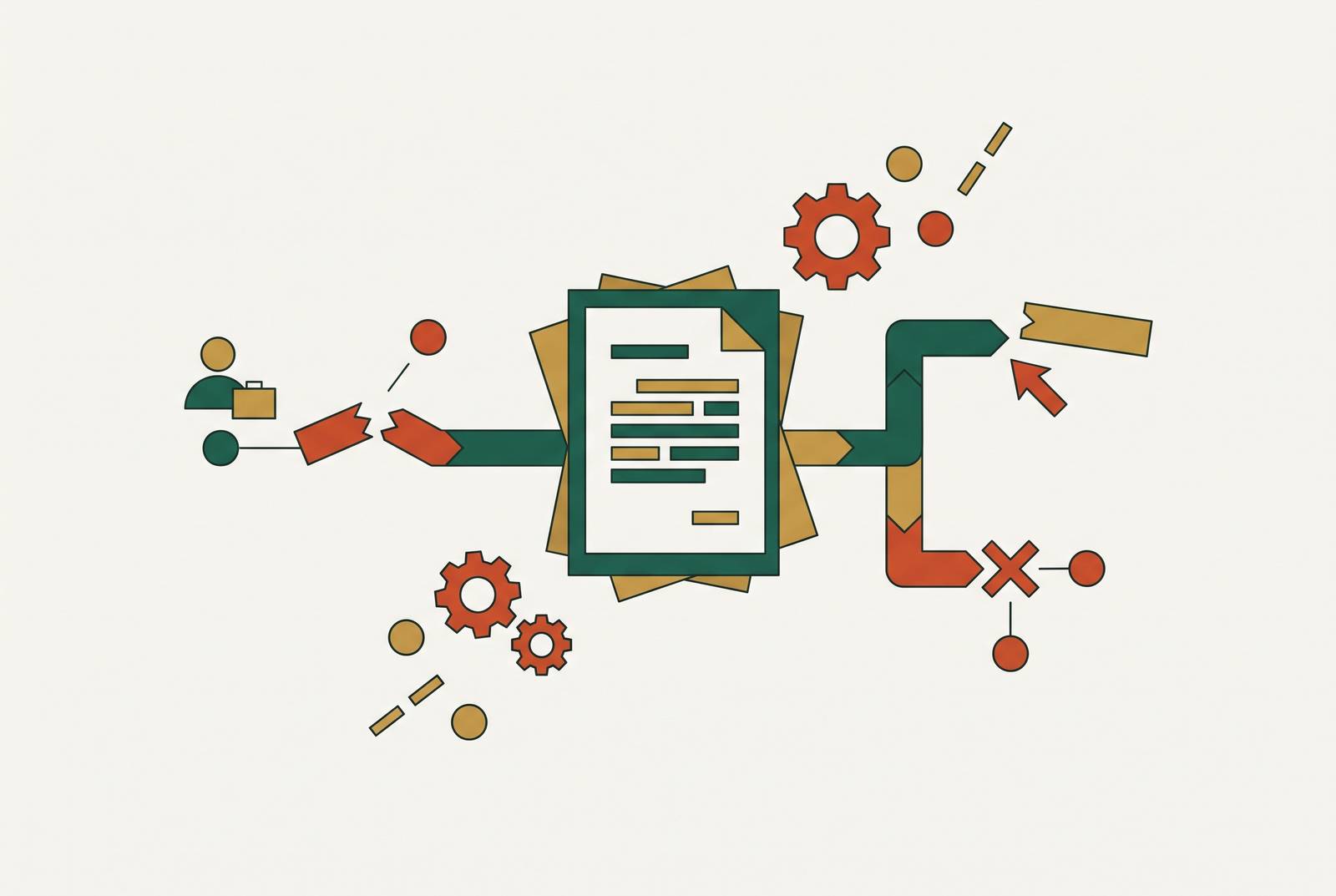
Contract lifecycle management software has reached a level of technical maturity that would have seemed implausible a decade ago, and yet enterprise legal teams keep watching their implementations stall, get abandoned, or quietly revert to email and shared drives. That gap, between what the technology can now do and how often organizations fail to get value from it, is the subject of this piece. AI-powered clause analysis, automated approval routing, and e-signature, whether built into the platform or stitched in through integration, appear across the CLM market as standard features. Depth still varies, especially in AI clause analysis, where some platforms offer little more than basic extraction while others support something closer to agentic review, and that range remains one of the few real differentiators among leading vendors. None of that maturity has translated into reliable outcomes: a large share of organizations replace their first CLM system within three years, and roughly half of initial deployments fall short of what the organization expected when it signed the contract. A technology problem would appear as a capability gap. Instead, the evidence shows a pattern of organizational breakdown that repeats regardless of which platform gets selected, which is the strongest available evidence that the software is not the thing failing.
The four structural failure modes that explain most CLM collapses
Post-mortems on failed CLM implementations read with a consistency that should unsettle anyone still shopping for a platform based on feature comparisons. Legal teams rarely conclude that the system itself was wrong. They report that adoption rates stayed too low, that data quality never met expectations, that sales drifted back to the old method within a few months of go-live. Four structural failures cause most of these outcomes, and each one is visible before a system goes live, if the organization knows what to look for.
The first is over-customization. Teams build a system so tightly fitted to their current process that every new workflow requires a call to the vendor. When the business changes faster than the platform can be reconfigured, which it eventually does, the team stops waiting for the vendor and starts working around the system. What was supposed to replace organizational chaos with order becomes an expensive replica of the same chaos, now running on licensed software.
The second is treating CLM as a legal department tool rather than enterprise infrastructure, and this failure mode carries more weight than the other three because it undermines the entire premise of enterprise-wide value. When legal selects and configures a system to serve its own review and approval processes, bringing sales in late or as an afterthought, the predictable result is that sales doesn't use it. Sales finds a faster path, whether that's a phone call, an email thread, or a document built from scratch, because the official system adds friction without delivering speed. A CLM that isn't designed from the outset as shared infrastructure across functions will eventually be reduced to a tool only the legal team touches, no matter how capable the underlying platform is.
The third is governance designed as a bottleneck instead of letting legal's judgment scale through delegated trust. When compliance gets built so that every deviation from standard language triggers a legal review, that review step doesn't disappear once it moves into the CLM. It gets a ticket number and a queue. The system becomes a formalized, well-documented version of the exact problem it was supposed to solve: slower approvals, now with a better audit trail attached. Systematizing a decision should let legal scale its judgment across a portfolio of contracts without reviewing each one by hand. Building the system as a gate just moves the gate.
The fourth is misalignment between whoever selects the platform and whoever has to use it daily. One of the more damaging and common patterns in enterprise procurement has IT or procurement choosing the platform, with legal operations inheriting that choice after the fact. Evaluators focused on integration architecture and security posture optimize for exactly those things, and the legal team that negotiates contracts every day was often not in the room for the decision. The resulting workflow design reflects the evaluator's assumptions about what matters, not legal's daily reality. Feature checklists miss this kind of architectural mismatch entirely: a platform built for mid-market agility may buckle under enterprise-scale volume, and a dense, highly configurable enterprise tool can slow down an organization that needs to move faster than its process allows.
These four failures compound each other and tend to appear together in the same deployment. A platform selected without legal's input is more likely to get over-customized later, as legal tries to retrofit a system it didn't choose. Governance built as a bottleneck compounds the enterprise infrastructure failure, because the departments shut out of the design are the same ones most likely to abandon the system once friction appears. Each mode makes the others more likely, which is part of why the overall failure rate has stayed so stubborn even as the underlying software has improved.
The fifth failure mode produced by the GenAI procurement wave
A fifth failure mode has emerged alongside the first four, and it's specific to the current moment in enterprise software buying. Legal teams, under real pressure from the C-suite to show AI adoption, are prioritizing AI-led capabilities when they evaluate CLM platforms. That pressure is producing a predictable pattern: law departments buy based on demos, AI buzzwords, and clause extraction features that look impressive in a sales pitch, then discover after signing that they never mapped how contracts actually move through their own organization. The AI features generally work as advertised. Organizations buy for the demo and still face the unresolved workflow design, because no AI feature fixes a broken approval chain on its own.
Consider a global sales team negotiating hundreds of contracts a month. That team doesn't fail because its AI tool can't extract a liability clause or flag a nonstandard indemnification term. It fails because approvals take days and happen over scattered email threads that nobody can track. The AI capability is real and functions as advertised. The organizational process that capability was supposed to accelerate was never fixed, so the AI layer sits on top of the same bottleneck it was bought to remove.
Agentic AI is pushing this further. As these systems take on more of the drafting work, the human role shifts from writing the contract to verifying and approving what the AI produced. The review environments where that verification is supposed to happen are not evolving at the same pace as the drafting capability. That mismatch creates a specific downstream failure: the AI drafts the contract, but the organization has no structured process for review, escalation, or sign-off on AI-generated output, so the bottleneck reappears at the human-in-the-loop stage, and one General Counsel reported that a year after a CLM implementation, legal professionals were spending more time resolving issues, not less, with the real bottlenecks sitting in review tasks: redlining, internal escalations, and the back-and-forth of negotiation rounds. None of this means AI in CLM is a bad bet. It means sequencing matters: process has to get fixed before platform selection, and platform has to get stabilized before the AI layer gets asked to carry real volume.
What non-adoption costs when it becomes institutional
The wasted implementation budget is the most visible cost of a failed CLM rollout and the least important one. The real damage is the value that keeps eroding, quietly, for years, after a system gets abandoned or limps along at partial use, without ever appearing as a single line item anyone has to explain.
Most CLM deployments stay siloed inside legal, which limits the system's business impact and reinforces the idea that CLM is a legal department tool. Once a system is siloed, the contract data it holds becomes invisible to the people who need it most. Sales can't check contracted pricing before making a commitment to a customer. Procurement can't confirm whether a supplier's proposed rate matches the terms already on file. Finance can't tie its revenue forecasts back to the contractual terms that are supposed to produce that revenue. Each of these is a specific, daily decision made with worse information than the organization already possesses somewhere in its own contract repository.
Legal teams report the lowest satisfaction with the foundational capabilities a trusted, connected business asset depends on: integration, data accuracy, repository management, and redlining and security. Dissatisfaction concentrated in those areas points to something beyond a software defect. It points to a system deployed without the organizational groundwork those capabilities depend on: clean data, process alignment across functions, and integration architecture planned in advance. None of that comes bundled with the platform. Each one is a prerequisite the organization has to build before the system goes live, not a feature the vendor delivers on day one.
Failure compounds through something close to institutional fatigue. Legal and procurement teams that have lived through one or more failed implementations carry real skepticism into the next attempt, and that skepticism makes the next project harder to sponsor, harder to staff, and harder to sustain through the inevitable rough months after go-live. Teams fall back to email and spreadsheets, and the organization grows more resistant to the next round of investment, even when that next attempt might be built correctly.
The organizational conditions that must exist before any system goes live
Most CLM projects start with a market analysis: comparing vendors, scoring features, running demos. That is the wrong place to start. A CLM system maps and encodes whatever process an organization feeds into it. An organization without clearly defined contract processes ends up digitizing its own chaos with a better interface wrapped around the same underlying problems.
Before any platform gets selected, the organization needs an honest inventory of its contract portfolio: what types of contracts it generates, in what volume, and at what level of complexity. A standard NDA signed with a routine partner has almost nothing in common, structurally, with a framework agreement negotiated with a key account over custom terms. In most large organizations, a bigger share of the contract portfolio can be automated than legal instinctively assumes, and this inventory is what reveals where that automation is genuinely possible and where individual legal judgment still has to carry the decision.
The organization also needs honest process mapping, not the process as it's described in a policy document, but the process as it actually runs. Who initiates a given contract, and in what format? Who gets pulled in, and at what point? Which approvals are formally required, and which ones quietly get skipped when deadlines press? Where does the most time actually get lost? This mapping tends to be uncomfortable, because it shows how far daily reality has drifted from the process the organization believes it follows. It remains the single most important step to take before any platform gets selected. If a contract currently passes through seven sets of hands before anyone signs it, a CLM system will not shorten that chain on its own. It will make the length of that chain visible to everyone, which is a different outcome entirely, and often an uncomfortable one for whoever owns the process.
Roles and accountability need to be defined across every function involved before go-live, not after. Who is responsible, at each stage of the contract lifecycle, across legal, sales, procurement, and finance? Lack of clarity on this point is one of the most common drivers of adoption failure once the system is live. CLM should get treated as a business initiative from the start, with legal, sales, procurement, and finance all engaged early enough that the system gets designed to accelerate revenue and reduce friction, not simply to help legal manage its own queue of documents.
A standardization baseline has to exist before automation gets layered on top of it: templates, clause libraries, and negotiation playbooks defined consistently across contract types. Without that baseline, automation doesn't eliminate inefficiency, it amplifies whatever inconsistency already existed, just faster and at greater scale. A crawl-walk-run approach to rollout, paired with real cross-functional buy-in and a change management plan built for the long term, is what separates a CLM system that becomes genuine infrastructure from one that becomes expensive shelfware. The playbook sits at the center of that standardization work, and it deserves its own treatment, because it's the specific mechanism that governs whether the AI capabilities legal departments are buying can scale.
How playbook design determines whether AI in CLM scales
A negotiation playbook is where legal writes down its judgment in a form the rest of the organization can act on consistently, without pulling a lawyer into every negotiation. Without a well-built playbook, AI layered into a CLM system produces inconsistent output that needs more human review, defeating the purpose of adding AI.
Most legal teams underestimate a gap in specificity, and that gap is the core problem. A playbook written for a human negotiator might say the organization prefers Delaware law, but will accept New York if the counterparty pushes back. An AI system can't work from that kind of instruction. It needs something closer to: if the governing law clause names anything other than Delaware or New York, replace it with Delaware; if the counterparty objects, change it to New York. That gap, between a preference a human lawyer can interpret in context and an instruction a machine can execute without interpretation, is where most AI-assisted negotiation efforts break down.
Playbooks built for human use can't simply get handed to an AI system with minor edits. They need to be rebuilt from scratch for machine execution, because the precision a machine needs is categorically different from the shorthand guidance a senior lawyer gives a junior colleague over coffee. Testing against historical contracts is the mechanism for checking whether a rebuilt playbook actually works, and it is how legal's control scales across volume without reviewing every single agreement by hand. Legal sets the rules that govern risk across the full portfolio, and the system applies those rules consistently across volume no human reviewer could manage alone. Human-in-the-loop review is not an optional add-on to this process anymore; in an agentic AI environment, it is a structural requirement for finishing a contract workflow, and it is why the review environments discussed earlier need to mature alongside the drafting capability, not years behind it.
CLM as enterprise infrastructure rather than a legal department tool
When a CLM system works as real infrastructure rather than a legal department tool, contract data turns into a shared business asset that multiple functions draw on, not an archive that only legal ever opens. Sales can check contracted pricing against a live system before making a commitment to a customer. Finance can tie its revenue forecasts directly to the contractual terms that produce that revenue. Procurement can verify, in real time, whether a supplier's proposed rate actually matches what's already on file. None of these questions could get answered reliably under the siloed deployments described earlier, and all of them become routine once the organizational groundwork, the process mapping, the cross-functional roles, the rebuilt playbooks, gets done before the platform goes live. That is the measure of whether a CLM implementation succeeded: not whether the software launched, but whether the rest of the business can now rely on it.