Template Governance and Version Control for Enterprise Contract Libraries
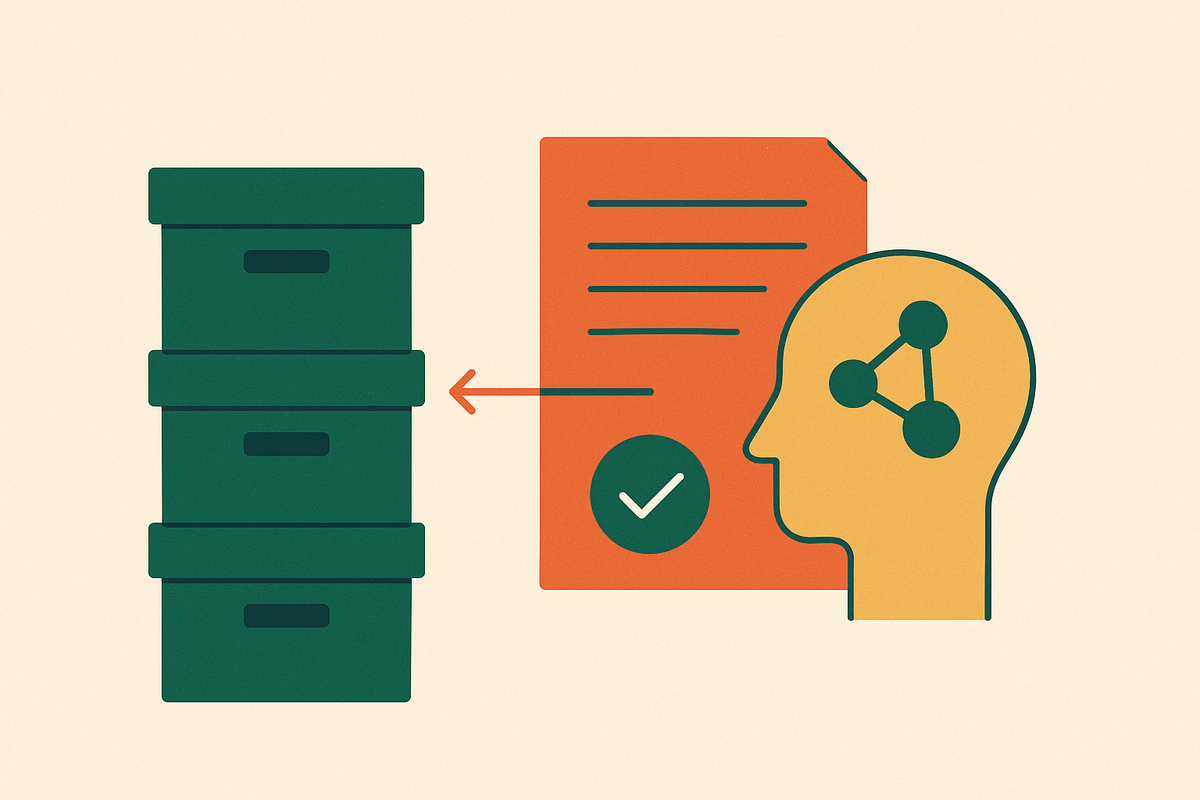
Governed templates prevent legal from reviewing every agreement individually.

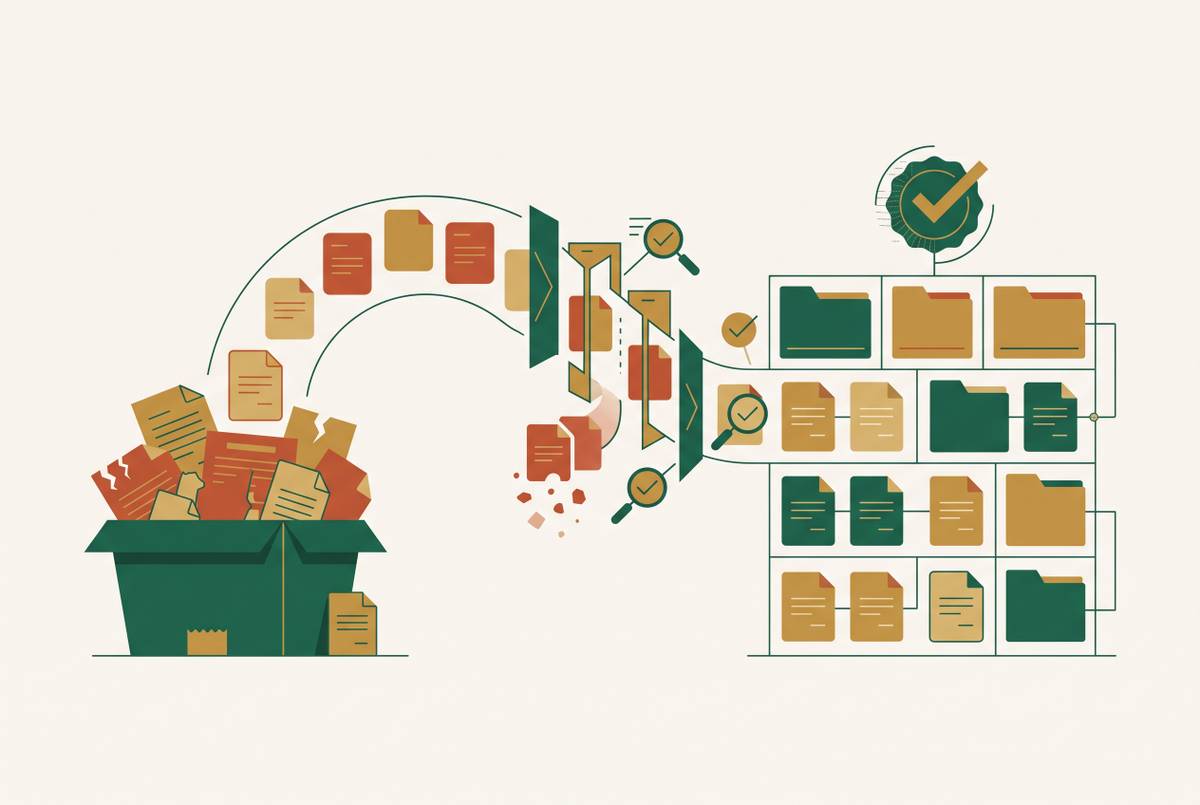
Large organizations manage contract volumes that run into the thousands, sometimes tens of thousands, of active agreements, and most of them have already paid for a place to put all of it. The problem sits beneath the storage layer. A repository full of contracts, without the rules that govern how those contracts are created, approved, and retired, is a filing cabinet with better search. Contracts scattered across emails, shared drives, and disconnected systems produce version-control errors, conflicting documents, and duplicate data entry, and that fragmentation persists even after a company buys a contract lifecycle management system, because the software does not by itself answer the question of which version of a template is the right one to use. When teams cannot trust that the template in front of them reflects the organization's current legal position, every agreement that comes out of it becomes an exception that needs a human to check it, rather than a governed output that can be trusted by default. The test is simple: if answering "which version of this template is authoritative?" requires a phone call or an internal message thread instead of a lookup, the library is storage rather than infrastructure, and storage alone was never the problem legal departments needed solved.
What templates do when governance is in place and what they fail to do when it is not
A template that has gone through proper governance is the organization's legal judgment, set once by the people with the authority to set it, and then applied across every agreement of that type without legal needing to review each one individually. Strip any of that away and teams revert to old habits: they start from whatever file happens to be on hand, pull language from a closed deal that may have reflected a one-off negotiated concession, and non-standard terms spread across the business without anyone noticing until an audit or a dispute surfaces them. Dropbox offers a clean illustration of what happens when the governance is actually built. The gain did not come from better storage. It came from codifying legal judgment into a reusable, governed instrument that non-lawyers could use with confidence. The time was never lost in the act of drafting. It was lost in the absence of a trustworthy starting point.
The four governance structures that transform a template from a file into an authoritative instrument
Template governance is not one policy but four structures working together: ownership, versioning rules, approval gates, and retirement protocols. A library missing any one of them is only partly governed, and each missing piece creates its own specific failure. Ownership means every template has a named person or role responsible for keeping it accurate and current. Without that, templates drift: nobody has the standing to change them, and nobody is accountable when they turn out to be wrong. Versioning rules go beyond a log of edits. They are a declared policy stating what counts as a new version, who has the authority to create one, and what happens to the status of the version it replaces. Without that policy, "version control" is really just file naming, and teams will quietly create their own variants until the library is as fragmented as the system it replaced. Approval gates treat a template change as what it actually is: a change in the risk position the organization takes on every future agreement of that type, deserving the same scrutiny as any other policy decision. Retirement protocols close the loop by making sure a superseded template cannot keep generating agreements on outdated terms simply because it is still easy to find. Each of the four depends on the other three. Ownership without approval gates is just an opinion. Versioning without retirement is a growing pile of old positions that never get swept away.
Version control as a legal position, not a file management habit
Every version of a template is a record of where the organization stood legally at a specific point in time. Losing control over that record means losing track of which positions are currently in force across an entire portfolio of agreements. A complete version history, with timestamps, named approvers, and the rationale behind each change, is the evidence base a company needs when a regulator, an auditor, or a counterparty asks why a particular term appears in a contract signed on a particular date. There is a cost to skipping this discipline that goes beyond compliance risk: when a template changes without a documented reason, the organization loses the thinking behind the change, and it becomes impossible to tell whether the next proposed revision would improve the company's position or quietly erode it. Every negotiation generates intelligence worth keeping, and capturing it in the template's version history, rather than letting it die inside a closed deal file, is how a legal team builds institutional memory instead of relearning the same lessons deal after deal.
Playbook governance: extending template discipline to negotiation positions
A playbook that nobody governs is a suggestion. A governed playbook is legal policy: it defines the organization's opening position, its acceptable fallback terms, and the point at which a negotiator has to escalate, and it needs the same ongoing maintenance as the templates it supports. Templates and playbooks work as a pair. The template is the form; the playbook is the decision logic behind it, spelling out the approved language options, the conditions under which each one applies, and who has the authority to approve a deviation. Playbooks drift for the same reasons templates do: business priorities shift, regulatory requirements change, market norms move, and a playbook that hasn't been reviewed in a while becomes a source of outdated guidance. Every playbook needs a defined review cycle and a named cross-functional team responsible for running it. The best playbooks also learn from what actually happens at the negotiating table: which fallback positions counterparties accepted without pushback, which terms caused the most friction, where deals stalled. That information should feed directly into the next review.
Approval gates and the role of cross-functional ownership in keeping templates current
An approval gate only works if the people sitting at it have the context to make a good decision. Template governance can't live entirely inside the legal department. There is real organizational friction in building a process with this many stakeholders, so the gate needs the right tooling and a clearly defined stakeholder map to stay fast, with review happening in days. Approval gates aren't only for brand-new templates, either. Every template needs a defined review cadence, triggered at minimum by an annual calendar review, and additionally by specific events: a regulatory change, an acquisition, a new product line.
Retirement protocols and the risk of templates that outlive their legal validity
Picture a sales team eighteen months from now, reaching for a contract template because it's the one saved to a shared drive, not realizing a newer version exists three folders away. It is the default outcome in any library where retirement has not been built as a process. An outdated template left accessible is not a dormant risk sitting quietly in a folder. It gets found, it gets used, and the agreement it produces carries an outdated legal position into a live, binding contract. Retirement has to mean more than relabeling a file. A documented rationale, explaining what changed, whether regulatory, commercial, or internal policy, and when, should travel with the retirement record. None of this means deleting the record. Preserving the retired version's full history makes it possible to answer, months or years later, what the company's position was on the date a specific contract was signed.
What a governed template library reveals
Once every agreement starts from an authoritative template, deviations from that template stop being noise and start being data. That is the real payoff of the governance work described above: it turns a pile of individual contracts into a portfolio that can be analyzed. With a clean baseline in place, a legal team can see which contract types deviate most often from standard positions, and which categories of counterparty are driving those deviations. None of this is possible in a library built on ad hoc drafts or unversioned templates, because there is no consistent baseline to measure deviation against. This is the shift from administering contracts one at a time to treating the contract portfolio as a source of intelligence, and that shift happens once the template layer is clean and governed.
How AI enforcement changes the economics of template governance
Governance that exists only on paper is a policy document. Governance enforced by software is an operating system, and the difference between the two is whether deviations from approved language get caught systematically or caught by luck. In a properly governed environment, AI can flag a deviation from approved clause language at the moment someone drafts or reviews a contract, before a non-standard term ever makes it into a signed agreement. It can route flagged contracts to the right approval gate automatically, based on the type and size of the deviation, so escalation doesn't depend on one person's judgment call. The same logic applies to playbooks: AI can surface the relevant one automatically based on contract type and counterparty risk tier, extending negotiation governance without requiring legal to sit in on every deal. This works only if the data environment underneath it can be trusted. AI enforcement of template governance has to run inside a data environment where a customer's contract data is never used to train models for other customers, because the confidentiality of the positions encoded in the templates is the whole point of governing them.
The regulatory environment that makes template governance a compliance requirement, not just a best practice
Regulation has caught up to this problem, and that changes what governance is for. Penalties for prohibited practices under the EU AI Act are severe enough that organizations can no longer treat AI governance as discretionary. Any company using AI in its contracting workflow now needs a documented compliance program, and that means the governance behind its templates and its AI tools has to be auditable, not just functional. This reaches into template design directly. Templates for AI vendor agreements need to address whether a provider will access or use data outside the contracted tool, and specifically whether a vendor will use a customer's project data to train models that could benefit that vendor's other customers, including competitors. It is a regulatory and competitive exposure that has to be addressed in the template itself. The risk compounds further because a meaningful share of department-level AI initiatives run without formal approval or oversight. A governance program built only for the tools legal knows about will miss the agreements being generated by tools it doesn't. Building a program that can withstand this environment starts with a clear sequence.
Building a template governance program: the sequence that makes it stick
Template governance is a program with a permanent operating model attached to it, not a project with a launch date and an end date. Treating it as the latter is the most common reason these efforts stall right after rollout. The starting point has to be an honest audit: what templates currently exist, who created each one, when it was last touched, and whether anyone is actually still using it. Without that baseline, any governance structure built on top of it is sitting on ground nobody has actually surveyed. Once the initial build is done, the operating model takes over: annual reviews of every template and playbook at minimum, plus reviews triggered by regulatory or commercial events as they come up. None of it survives contact with the organization if it adds friction without visible benefit. AI adoption and governance both succeed when they make life easier for the people handling contracts day to day, and governance that feels like extra paperwork gets worked around.
Legal's position in the business under rigorous template governance
A legal team that governs its templates this rigorously has done more than clean up its internal process. It has turned its own risk judgment into infrastructure that runs at the speed of the business, without needing a lawyer present in every transaction. That is the real strategic shift: a legal team that sets the rules governing risk across an entire portfolio, instead of reviewing each agreement one at a time in isolation, starts to function as a genuine partner to the business rather than a checkpoint it has to pass through. The effects are visible across the company. Commercial teams move faster because the template they're starting from is already approved, with legal's quality built into the foundation from the start. Finance and procurement get reliable, extractable data from contracts because the terms are consistent, instead of being buried in language that varies by whoever happened to draft it. Leadership can make decisions about contractual risk at the portfolio level because the underlying data is clean enough to aggregate in the first place, a capability that simply does not exist without the governed template layer beneath it. The investment pays for itself repeatedly: the infrastructure gets built once, and its value compounds with every agreement generated afterward. When a regulatory change lands, or a market shifts, or a counterparty pushes back on a standard position, a governed library can tell the organization how many agreements are affected, what the current position is, and what remediation looks like, within hours. That is the capability template governance actually builds, and it's the work that earns legal its place at the strategic table.